
In North America, one of the widely recognized services to get vehicle history reports is “Carfax.” But what most people don’t realize is that Carfax reports in the USA and Canada are not the same. Yes, that’s right.
Of course, they share the same goal, but the way they gather and present information can still differ by country. Especially if the vehicle was previously registered in another country or has crossed the border, these differences matter.
Understanding How Carfax Works
Before getting into the differences, it’s helpful to know how car history reports work in general.
Carfax gathers car data from a variety of data sources. The most common ones are insurance companies, auto repair facilities, auto auctions, and police reports. The dealership service records and the Department of Motor Vehicles also play a role.
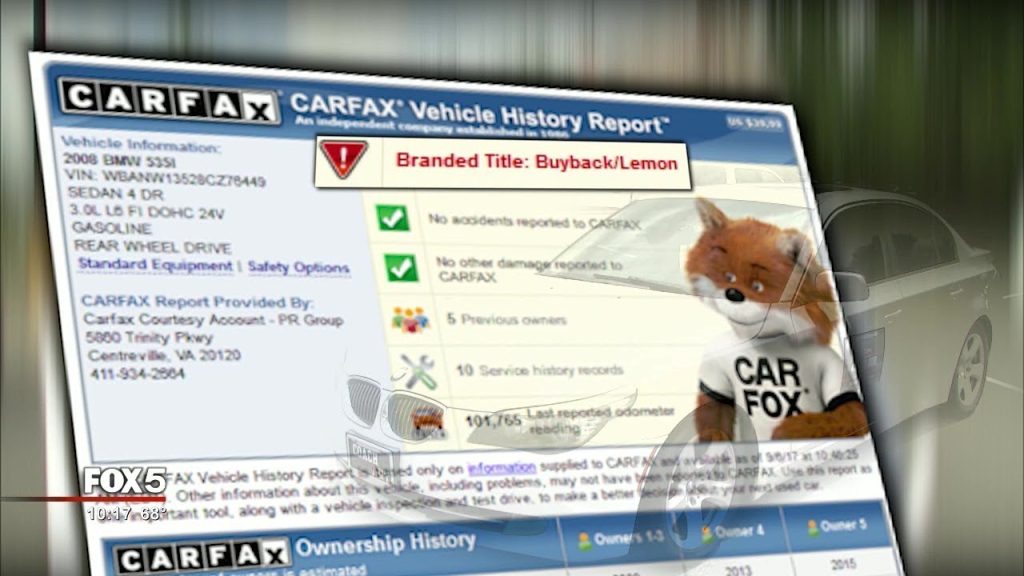
The system gathers the available information into a timeline that displays the car’s history when a report is created using the vehicle’s VIN (Vehicle Identification Number).
Normally, the history reports from a reliable platform may include:
- Accident or damage records
- Odometer readings
- Title branding (salvage, rebuilt, etc.)
- Hidden wear and mileage data
- Service history
- Registration history
- Open safety recalls
Carfax USA va Canada: A Quick Comparison Table
Here’s a table to help you understand the differences between the U.S. and Canadian systems:
| Feature | Carfax USA | Carfax Canada |
| Data sources | Primarily, U.S. agencies and businesses | Canadian provinces plus cross-border data |
| Lien information | U.S. lien data available in reports | Canadian lien checks available through specific reports |
| Insurance and claim data | Insurance claims often included | Strong integration with provincial insurance systems |
| Language | English | English and French |
| Cross-border coverage | Shows Canadian history if available | Can show U.S. history if the vehicle was in the U.S. |
4 Differences Between the USA and Canada Carfax Reports
1) Data Sources and Coverage
Vehicle records in the United States are generally maintained at the state level, meaning data is obtained from state motor vehicle bureaus, insurance companies, and service shops.
In Canada, automobile registration and insurance procedures are managed at the provincial level. Hence, Carfax Canada must interact with numerous provincial databases and public insurers.
Because of this structure:
- Canadian reports may contain detailed information on provincial insurance claims and functional damage.
- U.S. reports frequently rely significantly on dealer and service network information.
2) Lien Information Works Differently
A lien indicates that money is still owed on a car, typically from a loan.
In Canada, certain Carfax reports feature a national lien search across provinces, allowing buyers to determine whether the vehicle still has a financial claim attached.
Whereas the lien information is typically associated with state records in the United States and may appear differently depending on the state’s reporting systems.
3) Accident and Damage Reporting
Accident reporting can differ greatly across the two countries.
For example, certain Canadian provinces have public insurance systems, which implies that many accident claims and repair estimates are stored in centralized databases.
In the United States, accident data is frequently obtained from insurance firms, body shops, and repair facilities. Because reporting criteria vary by state and company, some accidents may appear in one system but not in another.
4) Cross-Border Vehicle Histories
Many automobiles travel between Canada and the United States over the course of their lives. In these situations, understanding cross-border history becomes important.
Carfax Canada reports may include U.S. registration, accident, and service data if the vehicle was previously operated in the U.S. However, some details, such as some lien records, may not transfer completely between systems.
Tips for Using Carfax Reports the Right Way
While using a platform for Carfax reports, consider these tips:
Tip #1: Always Run the VIN Yourself
Vehicles with Carfax reports are listed by many dealerships. Although this is useful, running your own VIN check is still an excellent idea. This guarantees that you are viewing the most up-to-date data.
Tip #2: Look Beyond the Accident Section
The accident history section is where most buyers go first, but it’s not the whole picture. Ownership history, service records, odometer rollbacks throughout time, and more should all be carefully examined.
Tip #3: Pay Attention to Location Changes
Changes in location can occasionally indicate auction transfers, dealer resales, disaster-related relocations, and other circumstances. Asking the seller about the vehicle’s history is useful, but it doesn’t necessarily indicate that something is wrong.
Tip #4: Verify Service and Maintenance Records
Service shops frequently mention regular maintenance, tire rotations, and oil changes. Long service history gaps in an automobile don’t always indicate that maintenance wasn’t performed, but it’s a good idea to request documentation from the seller.
Tip #5: Always Combine the Report with an Inspection
Although a Carfax report is an effective research tool, a professional examination should always come first. The car’s physical condition can be assessed by a reliable mechanic to determine whether it aligns with the report.
Final Thoughts
Carfax reports are one of the most valuable tools available to used car buyers. They provide insight into a vehicle’s past, helping people avoid costly mistakes and make more confident purchasing decisions.
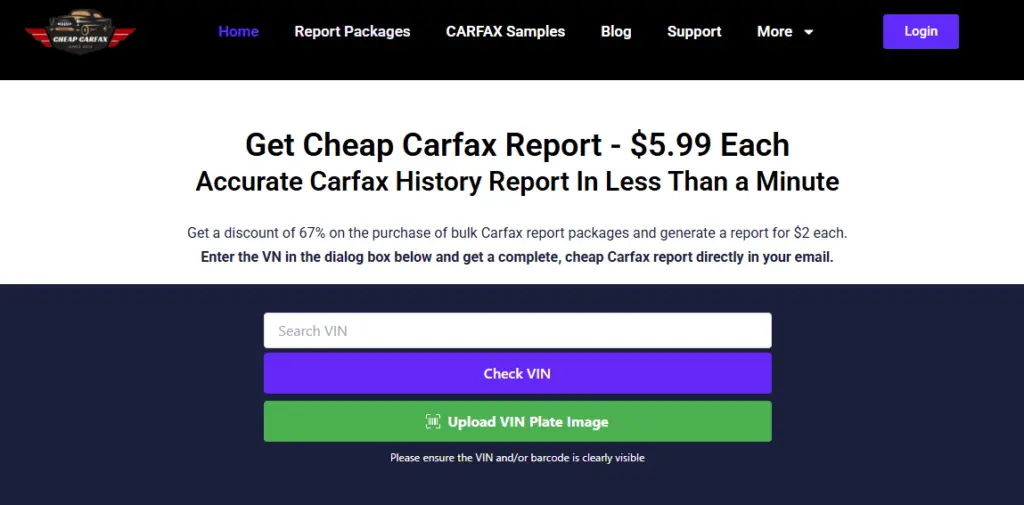
However, finding a reliable platform that provides Carfax reports at an affordable price can be the real challenge. That’s where CheapCarfax comes in!
They only charge $5.99 for a report that includes all the details you need, such as odometer readings, accident history, title information, car recalls, maintenance records, and more.
Their goal is simple: to make the car-buying process easier and faster with transparent pricing.