

Yes, 🚗🦊 does work for motorcycles. Thousands of motorcycles are sold every day without a thorough investigation of their accident history. That’s where Cheap CAR🦊 reports become a handy source.
According to Wikipedia, 🚗FAX has collected over 35 billion records from 151,000+ sources, including DMVs, insurance providers, and repair shops. However, motorcycle data remains limited, often missing key maintenance or accident history. Therefore, it is necessary to check your motorcycle’s 🚗🦊 report before buying any used one.
This article will guide you on whether CAR🦊 works on motorcycles or not. Let’s dive into it.
How 🚗FAX Works for Motorcycles
A 🚗🦊 motorcycle report works much like a car report. Just as cars pick up accident and repair records over the years, motorcycles do too, and a vehicle history report brings those records together in one place. Before you buy a used bike, the report can help you spot past accidents, [functional damage](https://cheapcarfax.net/carfax-functional-damage/), title changes, and other serious problems the seller may not mention.
Every modern motorcycle has a 17-character Vehicle Identification Number (VIN) that belongs to that bike alone. You’ll usually find it stamped on the steering head (the frame neck just behind the handlebars) or on a sticker on the frame.
Each time the bike is registered, titled, inspected, serviced at a reporting shop, or involved in an insurance claim, that VIN is recorded. CAR🦊 collects these records from sources such as DMVs, insurance companies, and service centers to build the motorcycle’s history profile, which can include:
Additionally, it’s worth noting that the 🚗FAX report for motorcycles may be less comprehensive than that for vehicles. It is because not all independent repair shops or private sellers report maintenance or service history.
Steps to Check the VIN for a Motorcycle
Here are the steps to follow to decode the VIN for a motorcycle:
- Copy the VIN of your desired motorcycle. For this case, we are decoding VIN for a Kawasaki Prairie 400.
- Go to 🚗🦊 VIN Decoder tool and paste the VIN in the dialog box.
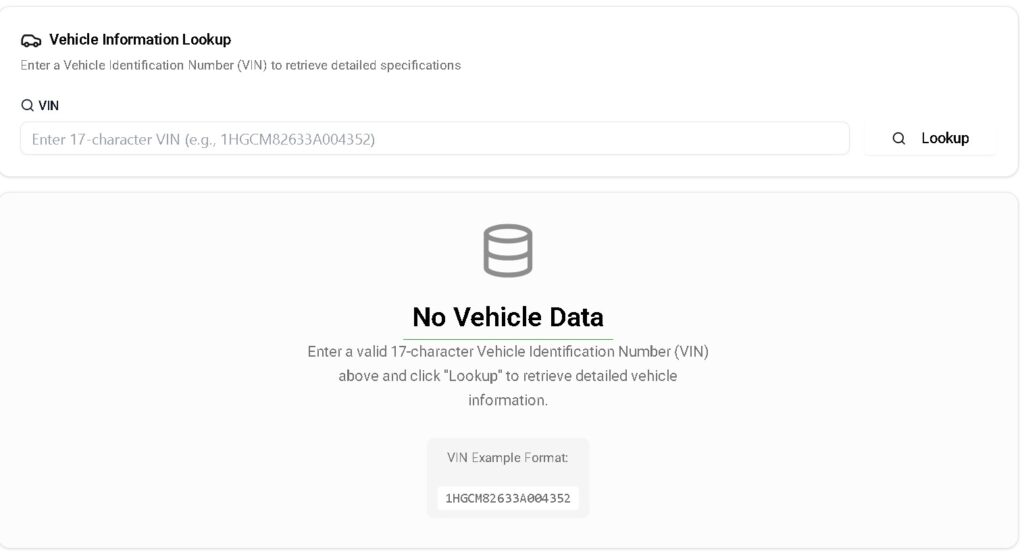
3. The VIN decoder tool will display all the details regarding the motorcycle.
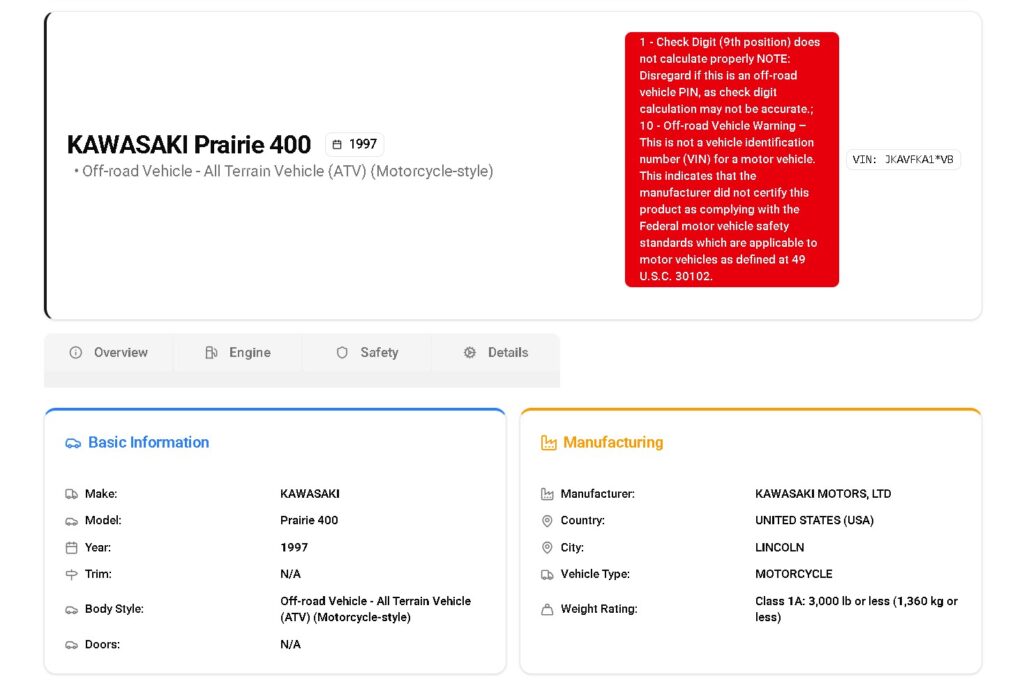
By doing this, you can decode any VIN number of a motorcycle within seconds for free.
What Information Does a Motorcycle CAR🦊 Report Include?
There are important elements in a motorcycle 🚗FAX report, which you should acknowledge before buying a used bike. A 🚗🦊 report for motorcycles provides a snapshot of the bike’s history, using data tied to its VIN. Here’s what it typically includes:
- Title Status: This section typically shows if the title of the motorcycle is clean, repaired, or rebuilt.
- Accident History: It includes any past accidents involving a motorcycle. These are sourced from police or insurance reports.
- Previous Owners: Generally stated as “Ownerships.” It will provide information about the lists, the number of previous owners, and the location where the bike was registered.
- Registration Locations: Tracks the states where the motorcycle has been titled and registered over time. A CAR🦊 report showing multiple state registrations can raise this red flag. Check out the 🚗FAX report sample if you are having any confusion.
Is It Worth Getting a 🚗🦊 Report for a Motorcycle?
Yes, everyone looking to buy a used motorcycle should obtain a CAR🦊 report. However, you should also acknowledge how to read a 🚗FAX report for any vehicle or motorcycle. Let’s check out the pros and cons of the 🚗🦊 report for a bike.
Pros:
- A CAR🦊 report for motorcycles can highlight major red flags, helping you make an informed buying decision.
- It helps confirm what the seller says about ownership, mileage, or service history.
- It saves time by giving the overall overview of the bike you are buying.
- It gives you better negotiation power if you find a fault or red flag in a motorcycle 🚗FAX report, or walk away.
Cons:
- Any motorcycle repairs, especially from private shops or DIY owners, aren’t reported to 🚗🦊. This can often lead to the safety and performance of the motorcycle.
- When it’s your turn to sell, the lack of service history or unexplained issues might make buyers wary or reduce your bike’s resale value. So, be careful with it.
Final Verdict
A CAR🦊 report for a motorcycle can help you identify potential issues with the bike and enable you to negotiate a more favorable price. Our free VIN decoder tool helps you decode any bike VIN for free. Simply copy the VIN and run it on our tool to check information.
FAQS
Does 🚗FAX report on motorcycles?
Yes, it does. Copy your VIN and run it on the VIN decoder and the 🚗🦊 report tool. It shows bike accident history, title change, ownerships, and other red flags if found.
Is a CAR🦊 report enough before buying a used motorcycle?
It’s a strong first step, but not the only one. A 🚗FAX report reveals what was officially documented, but some off-road damage, private repairs, or unreported incidents may not show up. Always pair the report with an in-person inspection from a trusted mechanic before finalizing any purchase.
How do I find the VIN on my motorcycle?
On most motorcycles, the VIN is stamped on the steering neck, the metal piece that connects the front forks to the frame. It may also appear on the engine casing or frame near the motor. It’s a 17-character alphanumeric code unique to your bike.