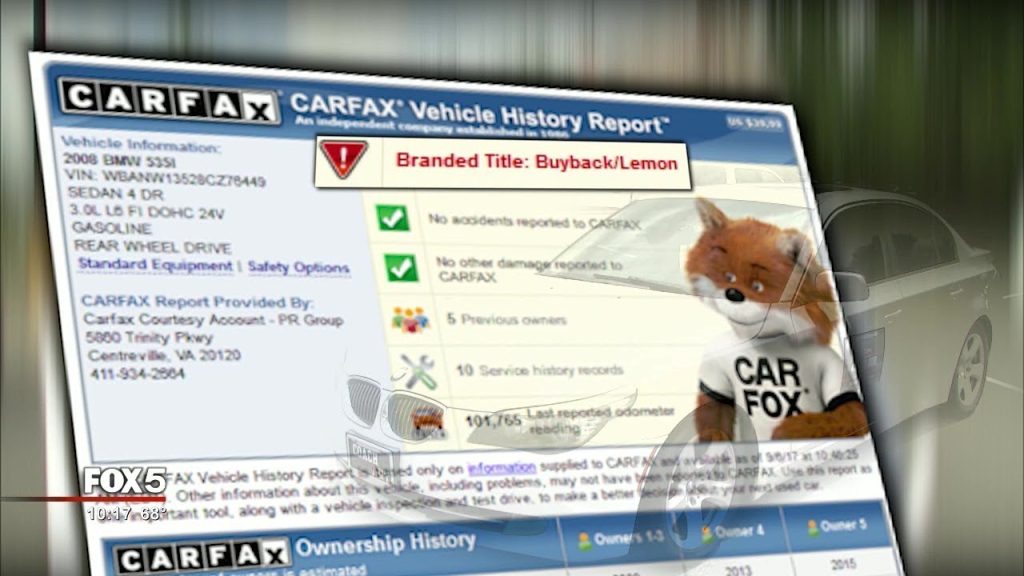

Flood damage significantly affects a car’s market value, making it difficult for owners and sellers to trade it at a good price. Carfax reports make it easier to track flood-damaged cars and find more accident history.
According to a report by Carfax, Texas and Florida have the most flooded cars reported. We previously mentioned Texas in our recent survey on why Texas and California have the most Carfax reports.

In this article, we will examine how flood damage impacts car value and how Carfax reports can help you identify it.
What is Flood Damage on Vehicles?
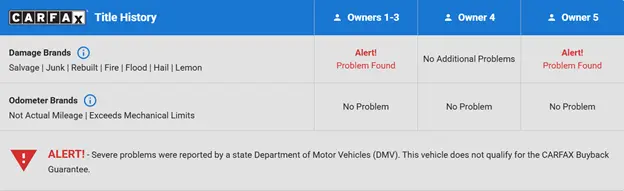
Flood-damaged cars often receive salvage or branded titles on Carfax, which you can easily identify when running a report. Moreover, it damages the car’s mechanical and electronic systems, which is irreversible.
The damage to the vehicle may not be visible at first glance; however, the faults and problems occur in the long term. Common problems occur due to flood damage:
- Electrical system failures (power windows, locks, infotainment issues)
- Engine corrosion leading to poor performance or sudden breakdowns
- Transmission damage causing delayed or rough gear shifts
- Airbag and safety sensor malfunctions
- Persistent mold and mildew growth inside the cabin
- Unpleasant odors that are difficult to remove
- Brake system corrosion reduces braking efficiency
- Rust in hidden areas such as under carpets and seats
What CARFAX Reveals About Damage Reports
A comprehensive CARFAX Report typically shows damage reports from insurance companies, repair shops, and auto auctions. Buyers should look for terminology like “water damage,” “flood damage,” or “hurricane” damage.
Notable events like Hurricane Ian and Hurricane Helene prompted thousands of vehicles to be flooded, and many of those cars found their way into the used car market.
When reviewing a CARFAX Canada report (if purchasing in Canada), the same principles apply: look for any notation of water damage or natural disasters.
These records provide crucial insights into whether a vehicle has experienced flooding or significant water exposure.
{Add Get your Carfax Report Now Button}
How to Detect Flood Damage During Physical Inspection
Here are the ways to check flood damage during physical inspection:
Visual Signs
Beyond what a CARFAX Report shows, buyers should conduct their own inspection. Look for moisture and water stains on interior carpets, upholstery, and dashboard components. These stains often appear around the bottom edges of doors, beneath seats, and along interior trim panels.
Checking Key Components
Inspect the engine oil dipstick carefully. If the oil appears milky or has a water-like consistency, this indicates water has entered the engine, a serious problem. Look at the headlights and tail lights for condensation or water droplets inside the lens assemblies, which suggests water has breached the vehicle’s seals.
Don’t overlook the air filter of the car. A water-soaked or discolored air filter indicates water exposure in the engine compartment. Check the spark plug wire cavities and around the ignition system for moisture or corrosion.
How Water-Damaged Vehicles Affect Used Car Market Prices
The used car value of a flood-damaged vehicle drops significantly and permanently. Insurance records and CARFAX Report notations ensure that informed buyers will always know about the damage history, making these vehicles nearly impossible to sell at competitive prices.
The used car market has become increasingly sophisticated, with platforms like Yahoo Autos providing price comparisons based on vehicle history. A car with documented water damage will consistently price lower than comparable vehicles without such a history.
Red Flags That Demand Further Investigation
If you encounter any of these situations, treat them as warnings to avoid the purchase or demand significant price reductions:
- A vehicle previously declared a total loss with a salvage title or rebuilt title
- Clean title history that seems inconsistent with the vehicle’s age or price
- Evidence of title washing, where the title was transferred between states shortly after damage
- Visible moisture, mold, or musty odors inside the cabin
- Rust in the engine bay or suspension components
- Water stains, discoloration, or damage to interior components
- A CARFAX Report that shows gaps in history or missing records
- Reluctance from sellers to provide full documentation or vehicle history
- Prices are significantly below used car market averages without a clear explanation
How to Protect Your Car From Flood Damage
Flood damage can severely reduce your car’s value and lead to long-term mechanical and electrical problems. Follow these essential car flood protection tips to keep your vehicle safe during heavy rain and flooding.
- Make sure not to drive near the flooded locations in your area
- Install flexible rubber linings on windows, doors, and trunks to prevent water from getting inside the vehicle
- Regularly clean drainage channels near the windshield and sunroof
- Disconnect all your batteries if you think the flood is unavoidable
- Maintain comprehensive car insurance that covers flood damage
Conclusion
A flood-damaged car has a lot of faults, which makes it even harder for owners to maintain it on a long-term basis. If you are looking to buy a used car, you should opt for manual inspection without solely relying on a Carfax report.
The bottom line: water damage is one of the most serious issues affecting vehicle value and reliability. Taking time to thoroughly investigate any vehicle’s history before purchase is never wasted effort—it’s the most important step in avoiding a costly mistake.